It amazes me that the Mother of Jesus has come to be such a contentious figure. Some time ago, I painted Our Lady with the Child Jesus in her arms. It showed at the Parker Gallery in CO. A church met in the same building, so members of the congregation would stop by to see the artwork after services. One Sunday only a young girl, about 9 years old, wondered from painting to painting, until she came to Mother and Child. She stood before it a moment considering the painting and then to my astonishment made a disdainful sound, “Psst!” 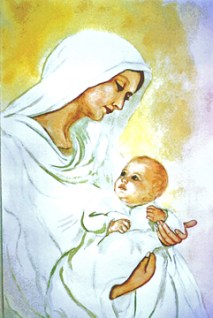 Then, the child tossed her head and left abruptly. The gesture seemed beyond her years. Wouldn’t you expect an image of a mother and a child to touch a soft spot in a young and tender heart? Instead, it struck like a rock bouncing off unyielding ground. I remembered the lyrics of a song from South Pacific:
You’ve to to be taught before it’s too late,
Before you are six or seven or eight
To hate all the people your relatives hate,
You’ve got to be carefully taught!
Prejudice can effect, or more accurately, infect us at any age or stage. It’s sad when it blinds us to goodness; saddest when it makes us immune to holiness, which, I guess, it always does.


 Be Holy!