Weapons of War – Hot Coals

The Anchoress got some disparaging email in response to”See How These Christians Shove One Another.  She was articulating “that we Christians are being ‘way too “earthbound” and over-worldly in the way we process and engage in politics.” The response of readers prompted her to print an email that she thought made her point, He says it so much better than I. In a nutshell, the writer said, in citing the story of Joshua and the battle of Jericho, “The Israelites did not attack Jericho head-on in a conventional way but chose instead the mystical path and gave the Holy Spirit room to do His work.

I’ve been struggling along these same lines.  Blogging makes me painfully aware of it.  I start the day with Mass and the Divine Office and come home to enter the fray.  I bounce between the spiritual and not so spiritual with my own war of words.  I read Archbishop Charles J. Chaput’s “Render Unto Caesar” hoping to gain some footing.  He confirmed the battle for me but didn’t give me my marching orders.  I believe I need to use all the tools God has placed at hand.

The Rosary is called “a weapon” by those who know its power. Mass and the Divine Office are like heavenly dynamite empowered by the Holy Spirit.  Faith turns up that power and places it in the hands of the angels to do battle in the realm the Apostle Paul tells us about. “For our struggle is not with flesh and blood but with the principalities, with the powers, with the world rulers of this present darkness, with the evils spirits in the heavens.” Ephesian 6: 12

I know, too,  I have other tools at my disposal: thoughts, words, deeds.  I know I mess up and will mess up, leading me back to prayer and repentance to begin again. Like Jesus on the Way of the Cross, I have to keep getting up and get myself up the mountain of Calvary for the Battle that wins the war. I don’t feel like a warrior, I think of myself as the little donkey carrying the Christ into Jerusalem for the climactic encounter between Good and Evil.  That’s were I am and I am tired.

When I complained of being tired though the battle has hardly begun, a friend wrote me saying,

“Remember the Narnia series?
Remember in “The Witch, The Lion and The Wardrobe”
how the children were confused, frightened, at the end
of their resources……..when they heard that Aslyn was
“on the move”.  Of course, they still had great battles
ahead but Aslyn had arrived…..  Have you had any such thoughts/feelings?  I hope that it is not wishful thinking on my part.”
I don’t think it is wishful thinking.  I think Aslyn is on the move.  It doesn’t really matter if I fall on the battlefield.  I’m on the right side and Christ is more than a Conqueror.  He is a Savior and in His hands our efforts and prayers strike at the hearts of enemies with the same Mercy that bought me to His side.
The side of Christ is pierced that we all may enter.  Today, Mercy Sunday, is a good day to think about that and the signature “Jesus I trust in you” that signs the Divine Mercy Image.  I think of that signature as my name confirming Christ’s image in me.
With my weapons in hand, all I need is a battle cry.  Semper Fidelis is a worthy battle cry. Cam Beck says,
What is left unsaid in the motto is also notable. The phrase is “Always faithful.” It isn’t “Sometimes Faithful.” Nor is it “Usually Faithful,” but always. It is not negotiable. It is not relative, but absolute.
For me, it’s Jesus Christ who is Always Faithful.

Mother Teresa of Calcutta – the Beginning

Before Mother Teresa’s mission began, she wrote a letter to Archbishop Perier in April of 1947, explaining God’s  insistent call as she was experiencing it.  “Come Be My Light” the Private Writings of the “Saint of Calcutta”, contains that letter.  In it are these words that Jesus spoke to Mother Teresa:

“The thirst you had for souls brought you so far. Are you afraid to take one more step for your Spouse, for Me, for Souls?  Is your generosity grown cold? Am I a second to you? You did not die for souls – that is why you don’t care what happens to them.  Your heart has never drowned in sorrow as it was My Mother’s. We both gave our all for souls… and you?”

I am relieved Jesus hasn’t addressed these words to me.  They break my heart. Then I think, oh, but He has.  Each day, we are all challenged to be Christ for someone, “I give you a new commandment. Love one another. As I have loved you, so you should love one another.”  John 13: 34  Taking one more step for my Spouse – for Jesus – for souls…what would that be for me – in my life?

Prepared by Repentance -Enabled by Faith

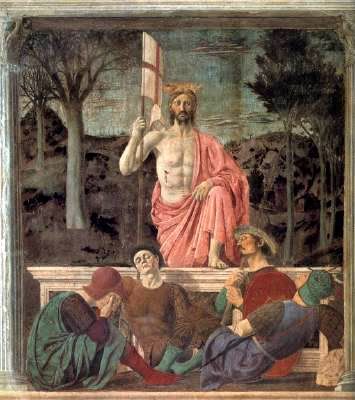
At Easter, we see the Resurrected Lord and are bathed in the Light of His conquering Love.  The Church places Jesus before the eyes of our hearts.  It is precisely because, only a few days ago, we beheld His pain and suffering, His Love unto Death, that we can grasp the triumph of His Love, this Agape.

Carmel is a reminder that Love  must be lived to be authentic.  Not that we can live it with perfection, though that is the Call, but that we try day by day in all humility.  For me, it is always beginning anew.  Repentance prepares us and faith enables us.

The Secular Carmelites share in Meditations from Carnel the words of  Pere Jacques:

“We are at Carmel only for this:  to love!
To love, of course, requires that we give proof of our love.  This love expresses itself in constant prayer.  I say “constant,” because this state of prayer must be our life not for only two hours a day, but all day long.  Our life must be a constant, silent prayer that rises unceasingly to God.  That is what constitutes our duty in life.
We must not confuse this state of prayer with religious sentimentality, or with pious feelings unrelated to authentic prayer, which can sometimes be piercingly painful.  That love, which is our life’s duty, must express itself in vibrant, zealous deeds, all aspects of which compel our careful consideration.
Only with deepest humility can we recognize how far we are from our goal.  Only those souls who have attained a lofty level of holiness can truly acknowledge how far they still are from their total fulfillment.  For example, the Cure of Ars considered himself more wretched than the notorious sinners to whom he ministered.  He realized that many of these fallen souls, had they received the same graces that he had received, would perhaps surpass him in holiness.  Only with humility can we recognize the torpor of our love.
Prayer is our primary duty.  Prayer is the reason why God has placed us on earth.  We learn truly to prayer, when we are in the presence and company of Christ.  Therefore, we must contemplate Christ for long periods of a time and seek him our persistently.  Consider those closest to Christ.  Saint John the Apostle grasped what was indispensable for a clear understanding of his master.  John never tired of probing and querying Christ.  We can see how John thus gained richer insights and fuller explanations, precisely because he went to the bother of approaching and asking Christ to clarify each day’s lesson.  I picture John, walking close behind Christ, as he made his way about the Holy Land.  Thus, John came to gain a wealth of intimate knowledge, which the other apostles did not acquire.  Herein lies the explanation for the special character of the fourth Gospel.  While the other apostles traveled across the then known world on their missionary journeys, John’s unique apostolate was to remain close to the Virgin Mary, whom Christ had entrusted to him.  Thus were these two great souls conjoined in love and prayer”.
In silent solitude, let us seek to realize that we truly can be in contact with God.  It is God whom we should aim to encounter in prayer.  It is God who is both the breath and the fulfillment of our life.  Amen.”

Benedict XVI – Homily -HOLY THURSDAY

From the HOLY THURSDAY – HOMILY OF POPE BENEDICT XVIEVENING MASS OF THE LORD’S SUPPER –BASILICA OF ST JOHN LATERAN – ROME

“Yes indeed, the Eucharist is more than a meal, it is a wedding-feast. And this wedding is rooted in God’s gift of himself even to death. In the words of Jesus at the Last Supper and in the Church’s Canon, the solemn mystery of the wedding is concealed under the expression “novum Testamentum”. This chalice is the new Testament – “the new Covenant in my blood”, as Saint Paul presents the words of Jesus over the chalice in today’s second reading (1 Cor 11:25). The Roman Canon adds: “of the new and everlasting covenant”, in order to express the indissolubility of God’s nuptial bond with humanity. The reason why older translations of the Bible do not say Covenant, but Testament, lies in the fact that this is no mere contract between two parties on the same level, but it brings into play the infinite distance between God and man. What we call the new and the ancient Covenant is not an agreement between two equal parties, but simply the gift of God who bequeaths to us his love – himself. Certainly, through this gift of his love, he transcends all distance and makes us truly his “partners” – the nuptial mystery of love is accomplished.

In order to understand profoundly what is taking place here, we must pay even greater attention to the words of the Bible and their original meaning. Scholars tell us that in those ancient times of which the histories of Israel’s forefathers speak, to “ratify a Covenant” means “to enter with others into a bond based on blood or to welcome the other into one’s own covenant fellowship and thus to enter into a communion of mutual rights and obligations”. In this way, a real, if non-material form of consanguinity is established. The partners become in some way “brothers of the same flesh and the same bones”. The covenant brings about a fellowship that means peace (cf. ThWNT II, 105-137). Can we now form at least an idea of what happened at the hour of the Last Supper, and what has been renewed ever since, whenever we celebrate the Eucharist? God, the living God, establishes a communion of peace with us, or to put it more strongly, he creates “consanguinity” between himself and us. Through the incarnation of Jesus, through the outpouring of his blood, we have been drawn into an utterly real consanguinity with Jesus and thus with God himself. The blood of Jesus is his love, in which divine life and human life have become one. Let us pray to the Lord, that we may come to understand ever more deeply the greatness of this mystery. Let us pray that in our innermost selves its transforming power will increase, so that we truly acquire consanguinity with Jesus, so that we are filled with his peace and grow in communion with one another.”

The entire homily at Whispers in the Loggia


Foot Washing at Washington Park

It speaks for itself.

Console Jesus in the Garden


From Story of a Soul by St. Therese of Lisieux:

How can a soul so imperfect as mine aspire to the plenitude of
Love? What is the key of this mystery? O my only Friend, why dost
Thou not reserve these infinite longings to lofty souls, to the
eagles that soar in the heights? Alas! I am but a poor little
unfledged bird. I am not an eagle, I have but the eagle's eyes and
heart! Yet, notwithstanding my exceeding littleness, I dare to
gaze upon the Divine Sun of Love, and I burn to dart upwards unto
Him! I would fly, I would imitate the eagles; but all that I can
do is to lift up my little wings--it is beyond my feeble power to
soar. What is to become of me? Must I die of sorrow because of my
helplessness? Oh, no! I will not even grieve. With daring
self-abandonment there will I remain until death, my gaze fixed
upon that Divine Sun. Nothing shall affright me, nor wind nor
rain. And should impenetrable clouds conceal the Orb of Love, and
should I seem to believe that beyond this life there is darkness
only, that would be the hour of perfect joy, the hour in which to
push my confidence to its uttermost bounds. I should not dare to
detach my gaze, well knowing that beyond the dark clouds the sweet
Sun still shines.

So far, O my God, I understand Thy Love for me. But Thou knowest
how often I forget this, my only care. I stray from Thy side, and
my scarcely fledged wings become draggled in the muddy pools of
earth; then I lament "like a young swallow,"and my lament
tells Thee all, and I remember, O Infinite Mercy! that "Thou didst
not come to call the just, but sinners."

Yet shouldst Thou still be deaf to the plaintive cries of Thy
feeble creature, shouldst Thou still be veiled, then I am content
to remain benumbed with cold, my wings bedraggled, and once more I
rejoice in this well-deserved suffering.

O Sun, my only Love, I am happy to feel myself so small, so frail
in Thy sunshine, and I am in peace . . . I know that all the
eagles of Thy Celestial Court have pity on me, they guard and
defend me, they put to flight the vultures--the demons that fain
would devour me. I fear them not, these demons, I am not destined
to be their prey, but the prey of the Divine Eagle.

O Eternal Word! O my Saviour! Thou art the Divine Eagle Whom I
love--Who lurest me. Thou Who, descending to this land of exile,
didst will to suffer and to die, in order to bear away the souls
of men and plunge them into the very heart of the Blessed
Trinity--Love's Eternal Home! Thou Who, reascending into
inaccessible light, dost still remain concealed here in our vale
of tears under the snow-white semblance of the Host, and this, to
nourish me with Thine own substance! O Jesus! forgive me if I tell
Thee that Thy Love reacheth even unto folly. And in face of this
folly, what wilt Thou, but that my heart leap up to Thee? How
could my trust have any limits?

I know that the Saints have made themselves as fools for Thy sake;
being 'eagles,' they have done great things. I am too little for
great things, and my folly it is to hope that Thy Love accepts me
as victim; my folly it is to count on the aid of Angels and
Saints, in order that I may fly unto Thee with thine own wings, O
my Divine Eagle! For as long a time as Thou willest I shall
remain--my eyes fixed upon Thee. I long to be allured by Thy
Divine Eyes; I would become Love's prey. I have the hope that Thou
wilt one day swoop down upon me, and, bearing me away to the
Source of all Love, Thou wilt plunge me at last into that glowing
abyss, that I may become for ever its happy Victim.

O Jesus! would that I could tell all _little souls_ of Thine
ineffable condescension! I feel that if by any possibility Thou
couldst find one weaker than my own, Thou wouldst take delight in
loading her with still greater favours, provided that she
abandoned herself with entire confidence to Thine Infinite Mercy.
But, O my Spouse, why these desires of mine to make known the
secrets of Thy Love? Is it not Thyself alone Who hast taught them
to me, and canst Thou not unveil them to others? Yea! I know it,
and this I implore Thee! . . .

I ENTREAT THEE TO LET THY DIVINE EYES REST UPON A VAST NUMBER OF
LITTLE SOULS, I ENTREAT THEE TO CHOOSE, IN THIS WORLD, A LEGION OF
LITTLE VICTIMS OF THY LOVE.
(The Project Gutenberg EBook of The Story of a Soul (L'Histoire d'une Ame)