
O Man, believe
That the Virgin did conceive
Her God and mine
And happily thine.©2013 Joann Nelander
Category Archives: Christian
Painting My Summer Days
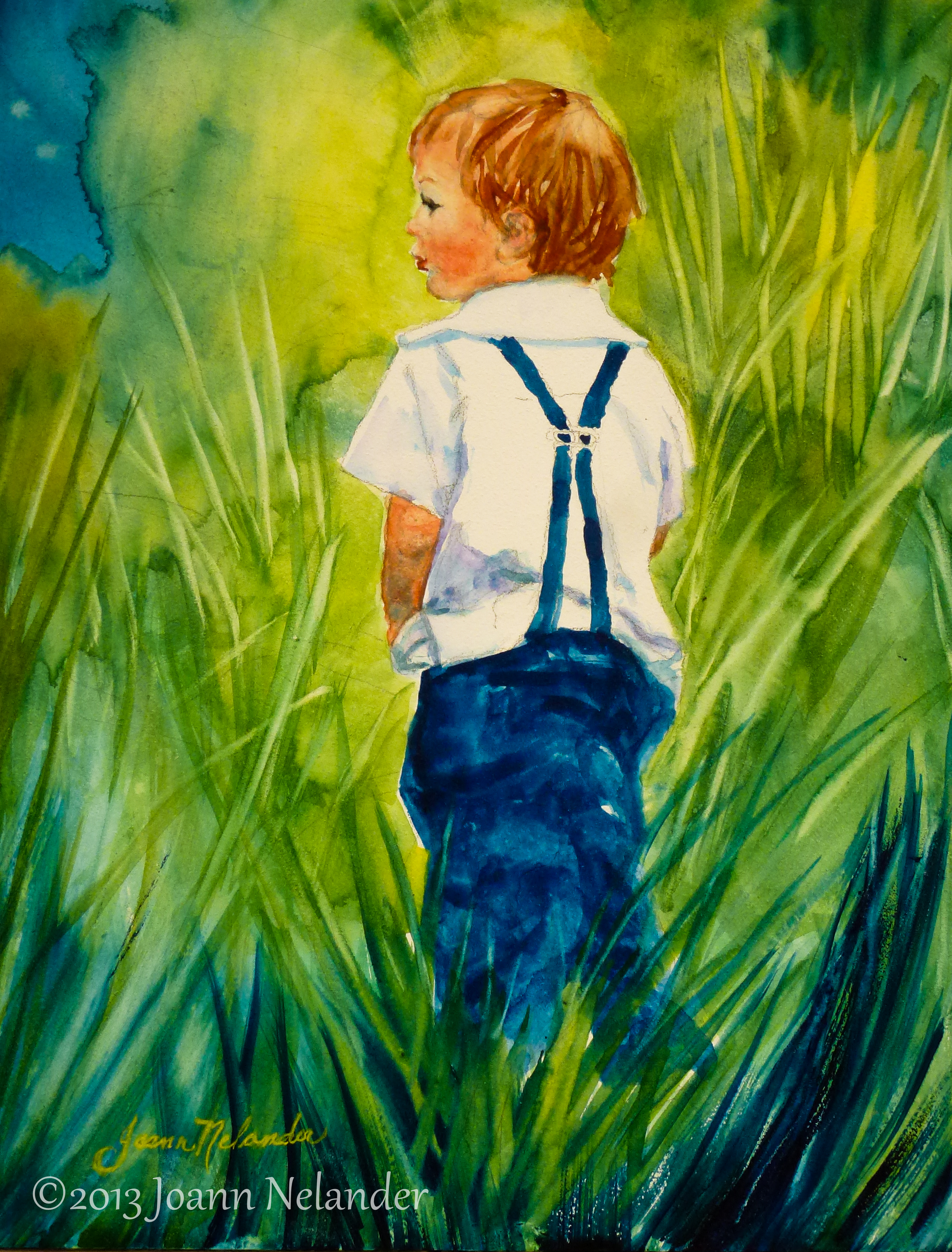
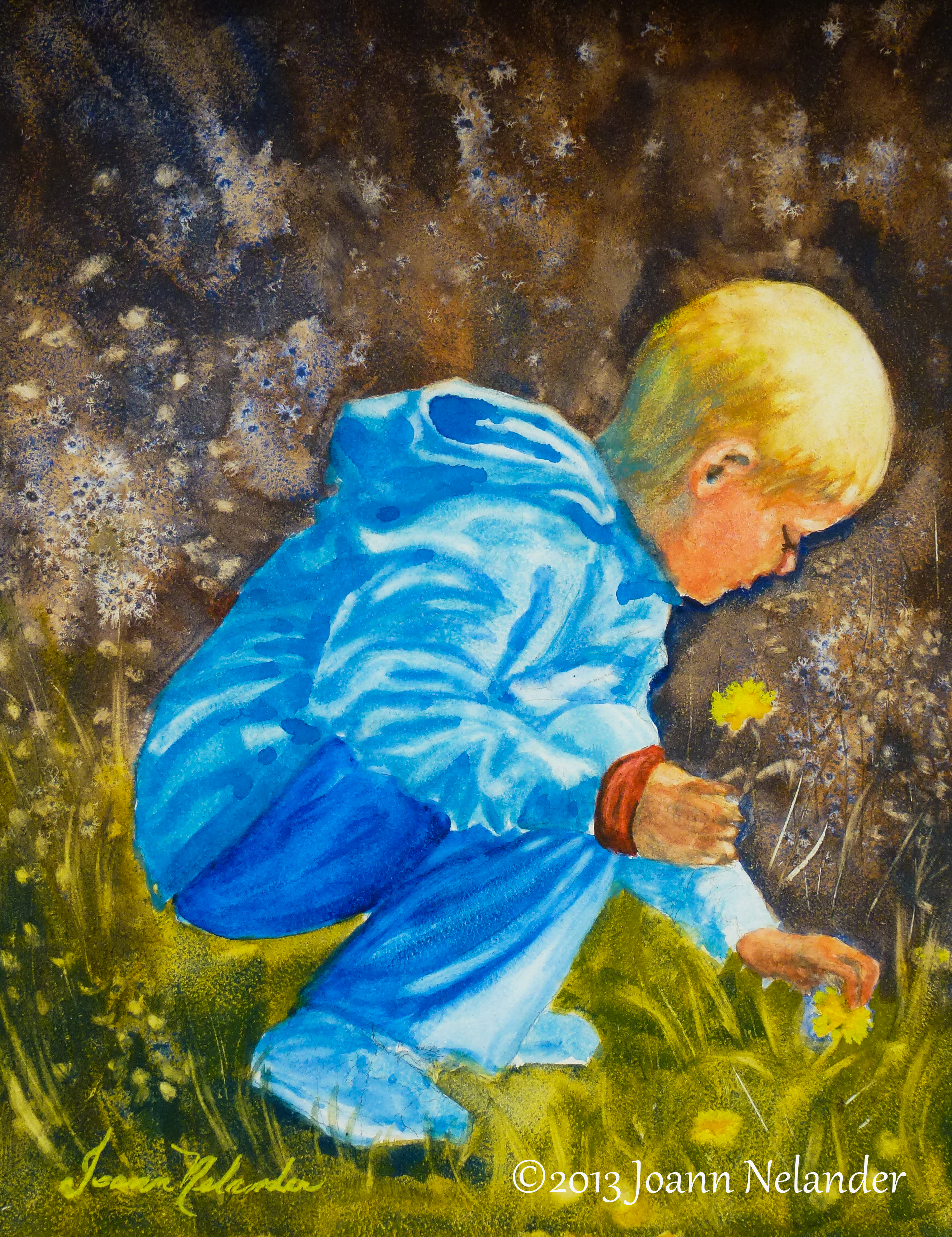
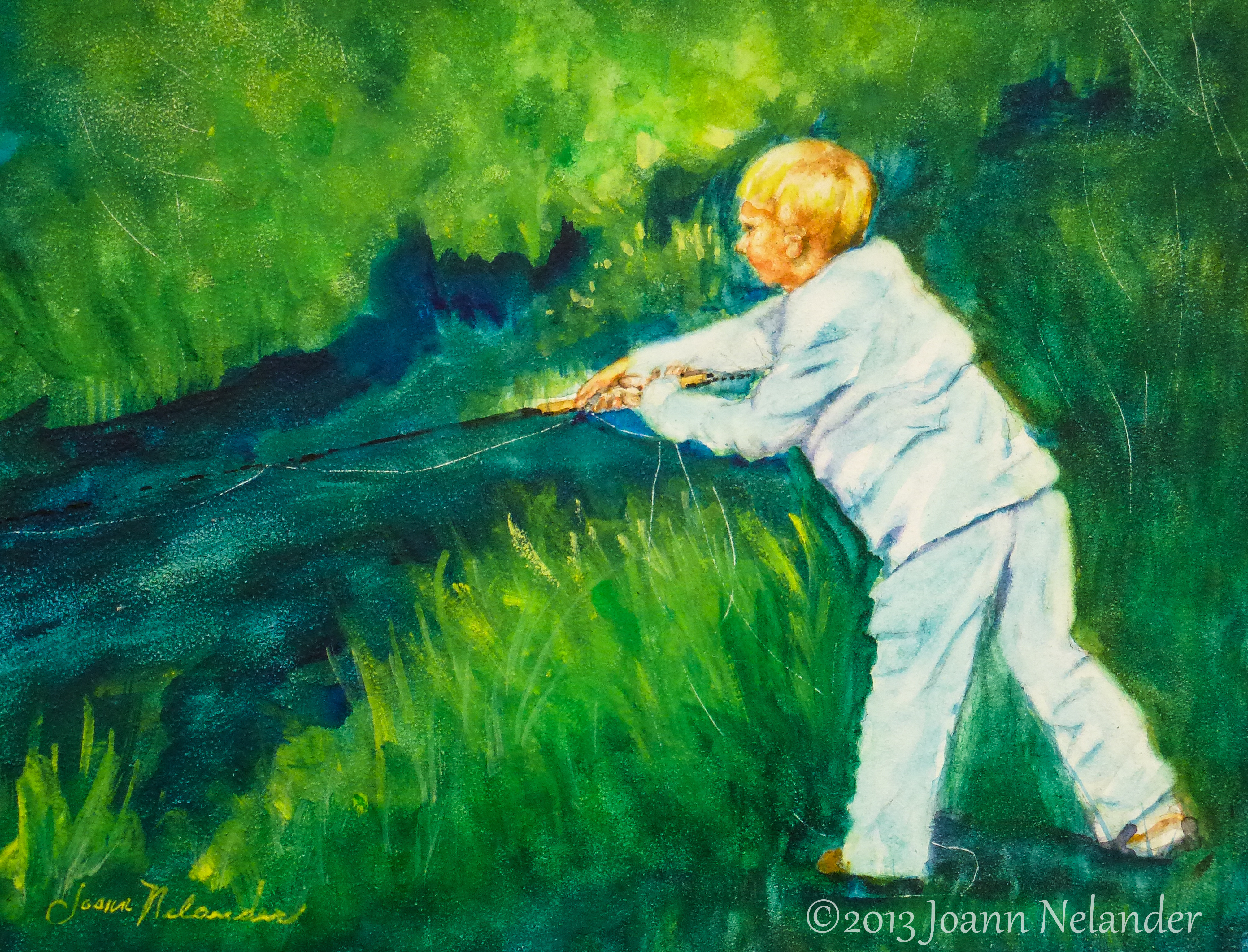
This year my memories come in watercolor:


Mary stored up all these things in her heart
From a sermon by Saint Lawrence Justinian, bishop Mary stored up all these things in her heart
While Mary contemplated all she had come to know through reading, listening and observing, she grew in faith, increased in merits, and was more illuminated by wisdom and more consumed by the fire of charity. The heavenly mysteries were opened to her, and she was filled with joy; she became fruitful by the Spirit, was being directed toward God, and watched over protectively while on earth. So remarkable are the divine graces that they elevate one from the lowest depths to the highest summit, and transform one to a greater holiness. How entirely blessed was the mind of the Virgin which, through the indwelling and guidance of the Spirit, was always and in every way open to the power of the Word of God. She was not led by her own senses, nor by her own will; thus she accomplished outwardly through her body what wisdom from within gave to her faith. It was fitting for divine Wisdom, which created itself a home in the Church, to use the intervention of the most blessed Mary in guarding the law, purifying the mind, giving an example of humility and providing a spiritual sacrifice.
Imitate her, O faithful soul. Enter into the deep recesses of your heart so that you may be purified spiritually and cleansed from your sins. God places more value on good will in all we do than on the works themselves. Therefore, whether we give ourselves to God in the work of contemplation or whether we serve the needs of our neighbor by good works, we accomplish these things because the love of Christ urges us on. The acceptable offering of the spiritual purification is accomplished not in a man-made temple but in the recesses of the heart where the Lord Jesus freely enters.
On false spiritual peace
From the teachings of Saint Dorotheus, abbot
On false spiritual peace
The man who finds fault with himself accepts all things cheerfully – misfortune, loss, disgrace, dishonor and any other kind of adversity. He believes that he is deserving of all these things and nothing can disturb him. No one could be more at peace than this man.
But perhaps you will offer me this objection: “Suppose my brother injures me, and on examining myself I find that I have not given him any cause. Why should I blame myself?”
Certainly if someone examines himself carefully and with fear of God, he will never find himself completely innocent. He will see that he has given some provocation by an action, a word or by his manner. If he does find that he is not guilty in any of these ways, certainly he must have injured that brother somehow at some other time. Or perhaps he has been a source of annoyance to some other brother. For this reason he deserves to endure the injury because of many other sins that he has committed on other occasions.
Someone else asks why he should accuse himself when he was sitting peacefully and quietly when a brother came upon him with an unkind or insulting word. He cannot tolerate it, and so he thinks that his anger is justified. If that brother had not approached him and said those words and upset him, he never would have sinned.
This kind of thinking is surely ridiculous and has no rational basis. For the fact that he has said anything at all in this situation breaks the cover on the passionate anger within him, which is all the more exposed by his excessive anxiety. If he wished, he would do penance. He has become like a clean, shiny grain of wheat that, when broken, is full of dirt inside.
The man who thinks that he is quiet and peaceful has within him a passion that he does not see. A brother comes up, utters some unkind word and immediately all the venom and mire that lie hidden within him are spewed out. If he wishes mercy, he must do penance, purify himself and strive to become perfect. He will see that he should have returned thanks to his brother instead of returning the injury, because his brother has proven to be an occasion of profit to him. It will not be long before he will no longer be bothered by these temptations. The more perfect he grows, the less these temptations will affect him. For the more the soul advances, the stronger and more powerful it becomes in bearing the difficulties that it meets.
The man who finds fault with himself accepts all things cheerfully – misfortune, loss, disgrace, dishonor and any other kind of adversity. He believes that he is deserving of all these things and nothing can disturb him. No one could be more at peace than this man.
But perhaps you will offer me this objection: “Suppose my brother injures me, and on examining myself I find that I have not given him any cause. Why should I blame myself?”
Certainly if someone examines himself carefully and with fear of God, he will never find himself completely innocent. He will see that he has given some provocation by an action, a word or by his manner. If he does find that he is not guilty in any of these ways, certainly he must have injured that brother somehow at some other time. Or perhaps he has been a source of annoyance to some other brother. For this reason he deserves to endure the injury because of many other sins that he has committed on other occasions.
Someone else asks why he should accuse himself when he was sitting peacefully and quietly when a brother came upon him with an unkind or insulting word. He cannot tolerate it, and so he thinks that his anger is justified. If that brother had not approached him and said those words and upset him, he never would have sinned.
This kind of thinking is surely ridiculous and has no rational basis. For the fact that he has said anything at all in this situation breaks the cover on the passionate anger within him, which is all the more exposed by his excessive anxiety. If he wished, he would do penance. He has become like a clean, shiny grain of wheat that, when broken, is full of dirt inside.
The man who thinks that he is quiet and peaceful has within him a passion that he does not see. A brother comes up, utters some unkind word and immediately all the venom and mire that lie hidden within him are spewed out. If he wishes mercy, he must do penance, purify himself and strive to become perfect. He will see that he should have returned thanks to his brother instead of returning the injury, because his brother has proven to be an occasion of profit to him. It will not be long before he will no longer be bothered by these temptations. The more perfect he grows, the less these temptations will affect him. For the more the soul advances, the stronger and more powerful it becomes in bearing the difficulties that it meets.
There is a time to be born, and a time to die
From a homily on Ecclesiastes by Saint Gregory of Nyssa, bishop There is a time to be born, and a time to die
There is a time to be born and a time to die. The fact that there is a natural link between birth and death is expressed very clearly in this text of Scripture. Death invariably follows birth and everyone who is born comes at last to the grave.
There is a time to be born and a time to die. God grant that mine may be a timely birth and a timely death! Of course no one imagines that the Speaker regards as acts of virtue our natural birth and death, in neither of which our own will plays any part. A woman does not give birth because she chooses to do so; neither does anyone die as a result of his own decision. Obviously, there is neither virtue nor vice in anything that lies beyond our control. So we must consider what is meant by a timely birth and a timely death.
It seems to me that the birth referred to here is our salvation, as is suggested by the prophet Isaiah. This reaches its full term and is not stillborn when, having been conceived by the fear of God, the soul’s own birth pangs bring it to the light of day. We are in a sense our own parents, and we give birth to ourselves by our own free choice of what is good. Such a choice becomes possible for us when we have received God into ourselves and have become children of God, children of the Most High. On the other hand, if what the Apostle calls the form of Christ has not been produced in us, we abort ourselves. The man of God must reach maturity.
Now if the meaning of a timely birth is clear, so also is the meaning of a timely death. For Saint Paul every moment was a time to die, as he proclaims in his letters: I swear by the pride I take in you that I face death every day. Elsewhere he says: For your sake we are put to death daily and we felt like men condemned to death. How Paul died daily is perfectly obvious. He never gave himself up to a sinful life but kept his body under constant control. He carried death with him, Christ’s death, wherever he went. He was always being crucified with Christ. It was not his own life he lived; it was Christ who lived in him. This surely was a timely death – a death whose end was true life.
I put to death and I shall give life, God says, teaching us that death to sin and life in the Spirit is his gift, and promising that whatever he puts to death he will restore to life again.
the incarnation of the Word and the sacrament of the eucharist
From the treatise On the Trinity by Saint Hilary, bishop
The unity of the faithful in God through the incarnation of the Word and the sacrament of the eucharist
We believe that the Word became flesh and that we receive his flesh in the Lord’s Supper. How then can we fail to believe that he really dwells within us? When he became man, he actually clothed himself in our flesh, uniting it to himself for ever. In the sacrament of his body he actually gives us his own flesh, which he has united to his divinity. This is why we are all one, because the Father is in Christ, and Christ is in us. He is in us through his flesh and we are in him. With him we form a unity which is in God.
The manner of our indwelling in him through the sacrament of his body and blood is evident from the Lord’s own words: This world will see me no longer but you shall see me. Because I live you shall live also, for I am in my Father, you are in me, and I am in you. If it had been a question of mere unity of will, why should he have given us this explanation of the steps by which it is achieved? He is in the Father by reason of his divine nature, we are in him by reason of his human birth, and he is in us through the mystery of the sacraments. This, surely, is what he wished us to believe; this is how he wanted us to understand the perfect unity that is achieved through our Mediator, who lives in the Father while we live in him, and who, while living in the Father, lives also in us. This is how we attain to unity with the Father. Christ is in very truth in the Father by his eternal generation; we are in very truth in Christ, and he likewise is in us.
Christ himself bore witness to the reality of his unity when he said: He who eats my flesh and drinks my blood lives in me and I in him. No one will be in Christ unless Christ himself has been in him; Christ will take to himself only the flesh of those who have received his flesh.
He had already explained the mystery of this perfect unity when he said: As the living Father sent me and I draw life from the Father, so he who eats my flesh will draw life from me. We draw life from his flesh just as he draws life from the Father. Such comparisons aid our understanding, since we can grasp a point more easily when we have an analogy. And the point is that Christ is the wellspring of our life. Since we who are in the flesh have Christ dwelling in us through his flesh, we shall draw life from him in the same way he draws life from the Father.

