
I’m hoping that our present crisis will encourage thinking.
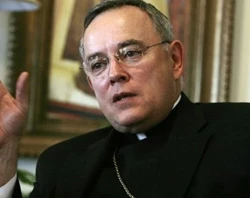
Archbishop Charles J. Chaput speaking in Toronto:
Obviously, I’ll be speaking tonight as an American, a Catholic and a bishop — though not necessarily in that order. Some of what I say may not be useful to a Canadian audience, especially those who aren’t Catholic. But I do believe that the heart of the Catholic political vocation remains the same for every believer in every country. The details of our political life change from nation to nation. But the mission of public Christian discipleship remains the same, because we all share the same baptism.
I’ve learned from experience, though, that Henry Ford was right when he said that “Two percent of the people think; three percent think they think, and 95 percent would rather die than think.
“Ford had a pretty dark view of humanity, which I don’t share. Most of the people I meet as a pastor have the brains and the talent to live very fulfilling lives. But Ford was right in one unintended way: American consumer culture is a very powerful narcotic. Moral reasoning can be hard, and TV is a great painkiller. This has political implications. Real freedom demands an ability to think, and a great deal of modern life — not just in the United States, but all over the developed world — seems deliberately designed to discourage that. So talking about God and Caesar, even if it wakes up just one Christian mind in an audience, is always worth the effort.
I think the message of “Render Unto Caesar” can be condensed into a few basic points.Here’s the first point. For many years, studies have shown that Americans have a very poor sense of history. That’s very dangerous, because as Thucydides and Machiavelli and Thomas Jefferson have all said, history matters. It matters because the past shapes the present, and the present shapes the future. If Catholics don’t know history, and especially their own history as Catholics, then somebody else — and usually somebody not very friendly — will create their history for them.
Let me put it another way. A man with amnesia has no future and no present because he can’t remember his past. The past is a man’s anchor in experience and reality. Without it, he may as well be floating in space. In like manner, if we Catholics don’t remember and defend our religious history as a believing people, nobody else will, and then we won’t have a future because we won’t have a past. If we don’t know how the Church worked with or struggled against political rulers in the past, then we can’t think clearly about the relations between Church and state today.
 Be Holy!